How to Make Remote Work, Work
Remote Work Secrets - Edition #46
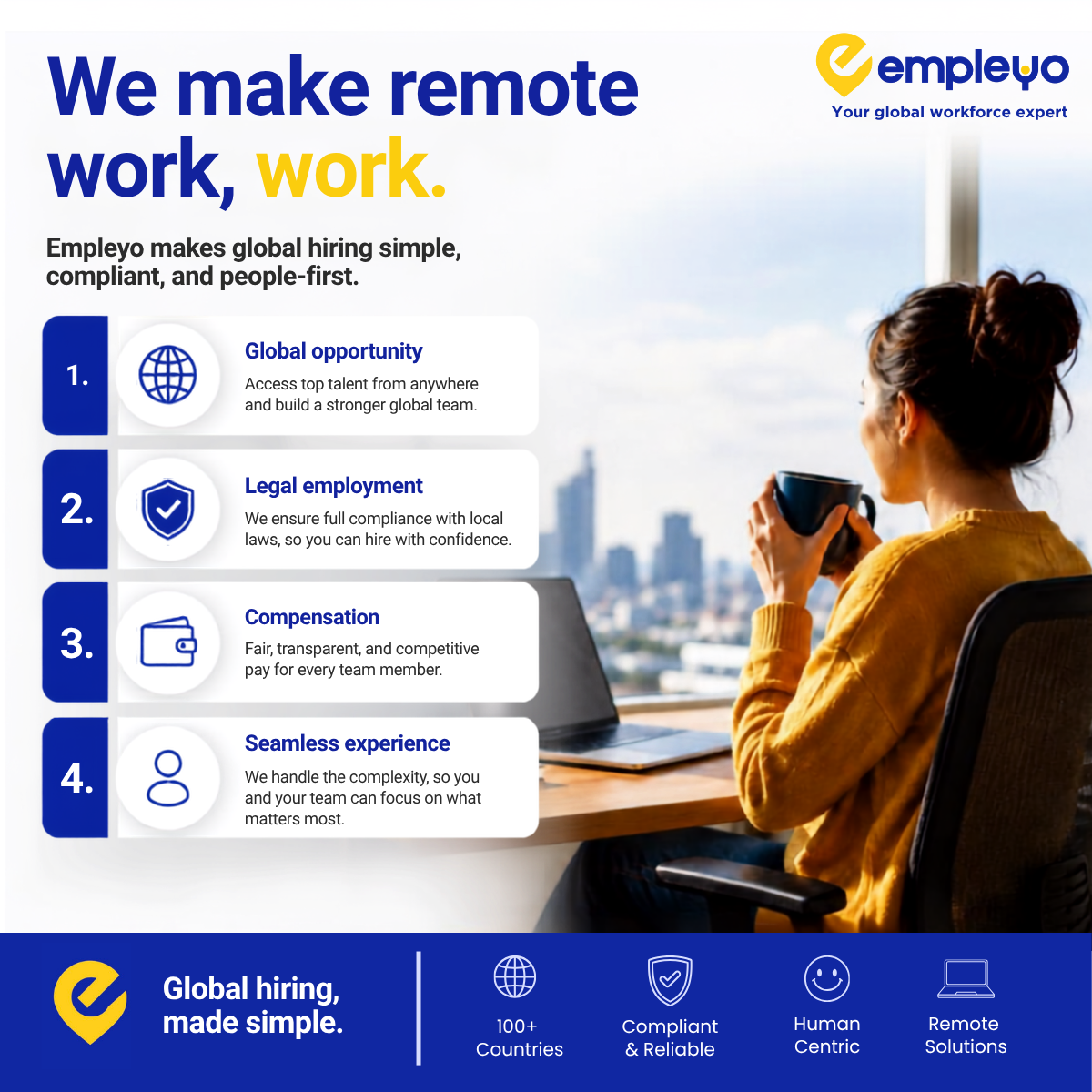
This week's guest piece comes from our partners at Empleyo, who work in international employment and remote hiring infrastructure.
What's Inside:
Why your kitchen table is costing you the interview. A cluttered background says more than your resume does.
The home office checklist most people skip until it's too late. Ergonomics first, aesthetics never.
Why your Wi-Fi might be sabotaging your next big call. Reliable internet is an integral part of your infrastructure.
This Week's Remote Roles. Real remote roles for Senior Professionals.
Work isn’t a location anymore. It’s an open field.
For decades, where you lived largely determined where you could work. Job searches happened within commuting distance, companies recruited around their offices, and some of the best opportunities were automatically out of reach because of geography.
Remote work changed that.
Today, a talented professional in Baltimore can work for a company in London. A growing business in Berlin can hire a specialist in Toronto. A startup in Paris can build a team across several countries without asking everyone to relocate.
The distance between talent and opportunity has never been smaller.
But removing the office doesn’t automatically make remote work work.
Behind every successful international remote hire are practical questions around employment contracts, payroll, tax, benefits, working practices, immigration and local labour laws.
The next phase of remote work isn't simply about where we work. It's about building the infrastructure that allows people and companies to work together successfully, wherever they happen to be.
Remote Work Creates a Bigger Playing Field
The traditional hiring model created invisible boundaries around both employers and employees.
For professionals, career options were often limited to employers within their city or companies willing to pay for relocation.
For businesses, recruitment meant competing for candidates within a relatively small geographic talent pool.
Remote work changes the equation for both sides.
An employee can potentially access roles, companies, industries and compensation opportunities beyond their local market. Employers can look beyond the immediate radius of their headquarters and find people based on skills, experience and fit rather than location.
The question is no longer:
“Who is available near us?”
It becomes:
“Who is the right person for this role?”
And that creates a much bigger opportunity.
What Do You Need to Make Remote Work Work?
1. Access Global Opportunities
Remote work can transform a job search from a radius of 20 miles into a global marketplace.
For employees, that can mean access to companies and career opportunities that simply wouldn't have been available locally.
For employers, it means accessing talent beyond the cities where they happen to have offices.
Instead of allowing geography to determine who can work together, businesses can focus on finding the right skills and experience.
2. Navigate Legal & Tax Roadblocks
Being remote doesn't mean employment laws disappear.
If an employee works from another country, employers may need to consider locally compliant employment contracts, payroll, tax withholding, social security, statutory benefits, leave entitlements and other employment protections.
That's where solutions such as an Employer of Record (EOR) can become part of the remote-work infrastructure.
An EOR can enable a business to employ someone in another country without necessarily establishing its own legal entity there, while helping manage the local employment requirements associated with the hire.
Remote work removes geographic barriers. The employment infrastructure needs to keep up.
3. Build Your Remote Advantage
Remote-first companies don't just look for people who can work from home.
They need people who can work effectively across distance.
For employees, skills such as asynchronous communication, documentation, independence, time management and working across cultures and time zones can become genuine competitive advantages.
For employers, this means designing communication, onboarding, performance management and career development so they work equally well for someone five desks away or five time zones away.
The strongest remote companies don't simply recreate the office online.
They design work differently.
4. Think Beyond Recruitment
Finding someone is only the beginning.
Once an international candidate accepts an offer, companies need to answer a much bigger question:
How do we actually employ them?
That can involve payroll, benefits, tax, employment contracts, immigration, work permits, relocation, onboarding and ongoing compliance.
The ability to recruit globally only works when companies have the infrastructure to employ globally too.
For Employees: Your Career Can Be Global
Remote work gives professionals something previous generations rarely had: the ability to separate where you live from where your career can go.
Your next employer might not have an office in your city.
It might not even have an office in your country.
That creates opportunities to explore different industries, international teams, new working cultures and potentially more competitive compensation.
But global opportunities also require global readiness.
Understanding how remote companies operate, becoming confident with asynchronous communication and knowing what to ask about contracts, compensation, benefits and international employment arrangements can help you compete in a much larger market.
Your dream role isn't necessarily sitting in an office downtown.
It could be sitting at a company three time zones away that doesn't even know you exist yet.
For Employers: Your Talent Pool Just Got Bigger
For employers, remote hiring creates the opportunity to stop recruiting primarily based on proximity.
The best engineer, salesperson, marketer, finance specialist or operations professional for your business could be located almost anywhere.
But international hiring also introduces complexity.
Every country has its own rules around employment, payroll, taxation, social security, benefits, termination and immigration.
That's where the infrastructure behind global employment becomes important.
At Empleyo, we help companies navigate international employment through Employer of Record, global payroll, immigration, relocation, recruitment and workforce solutions - helping businesses connect global talent with global opportunities.
Remote work removed the distance between talent and opportunity.
Now we need to make the employment relationship just as seamless.
This Week's Remote Roles
🎯Fully Remote Jobs (No "Fake Remote" Here):
Want to see the other 150+ roles? Check them out through the button below.
Ready to Put Remote Work Into Action?
If remote work opens the world, the next step is meeting the companies already hiring across it.
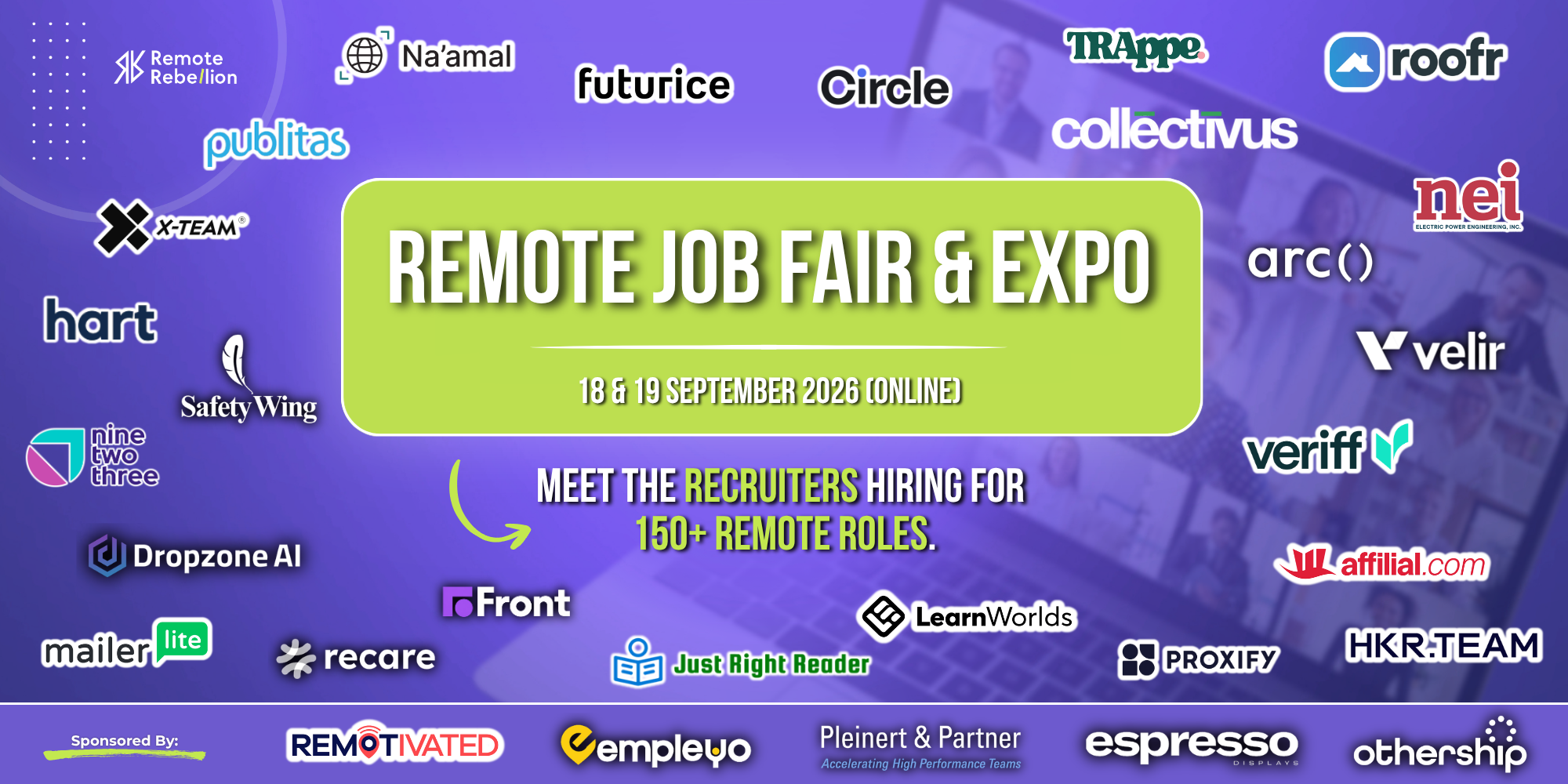
The Remote Job Fair & Expo 2026 is happening online on 18 & 19 September 2026, bringing remote professionals directly together with recruiters and hiring managers from remote-first companies.
And this isn't just another place to upload your resume.
The event brings together 24 remote-first companies currently hiring globally, with more than 150 remote roles available worldwide. Opportunities span marketing and design, sales and account management, operations, product, technology and software engineering, leadership and other functions.
Attendees will be able to visit virtual company booths, speak with hiring managers in real time, participate in networking sessions and 1:1 chats, and join discussions with remote-work leaders and career experts.
📅 18-19 September 2026
💻 Online
🌍 24 remote-first companies
💼 150+ remote roles worldwide
🤝 Direct access to recruiters & hiring managers
The event runs from 10:00am-2:00pm EDT / 4:00pm-8:00pm CET on both days, and attendees can drop in and out depending on the sessions that interest them.
Remote work has already removed much of the distance between talent and opportunity.
Now it's time to make those connections happen.
Stay Rebellious,
Michelle & The RR Team
This week's newsletter is sponsored by Empleyo, your Employer of Record for hiring anywhere.
Building a remote team shouldn't mean burying yourself in forms. Whether you need to bring on remote hires, grow a global team, or dodge an international legal mess, Empleyo has it covered. They take care of local payroll, compliance, and the rest of that unglamorous stuff, so you can spend your time actually running your business.