The Workspace You Need, The Usage You Can See
Remote Work Secrets - Edition #49
What's Inside:
Why "fully booked" doesn't mean what you think it means. Your calendar's telling you one story, your floor's telling you another.
The gap between how you actually work and how coworking space gets sold to you. It's not café or lease - there's a third option.
The real cost of a ghost booking. Someone's paying for that empty desk, and it's probably you.
This Week's Remote Roles. Real remote roles for Senior Professionals.
This week's article is credited to The Othership Team
If you've ever taken a client call from a kitchen table while neighbouring construction takes place, or watched a "fully booked" meeting room sit empty while your 12-person team is crammed round a 4-person high-table, you've bumped into the same issue from two different angles. One is about finding the right space to work. The other is about knowing what's actually happening inside the workplace you have.
Two Different Problems, One Root Cause
For people trying to find space, it can be difficult to know if it will suit your needs. Does it have a quiet area for a client call? For people managing space, it's a visibility problem where the booking calendar doesn't match what's actually happening on the floor. They're different problems, but they come from the same root - nobody's getting an accurate read on what a workspace is really delivering.

The Supply Gap: Finding Space That Fits
For people working hybrid or remotely - freelancers, founders, distributed teams, and anyone job hunting for a role that isn't tied to a single office - the gap is between how space is needed and how it's usually sold.
Between a noisy cafe, and an expensive monthly pass at a coworking space, choices can appear limited.
Whether you're considering a new role or trying to work more productively, finding a space that’s available for an hour or a day and has all the amenities you need is important. Othership's Workspace Finder lists 500+ bookable spaces across the UK built around exactly that. And if your team only needs to be in the same room occasionally, that doesn't have to mean someone signs a long lease to make it happen.
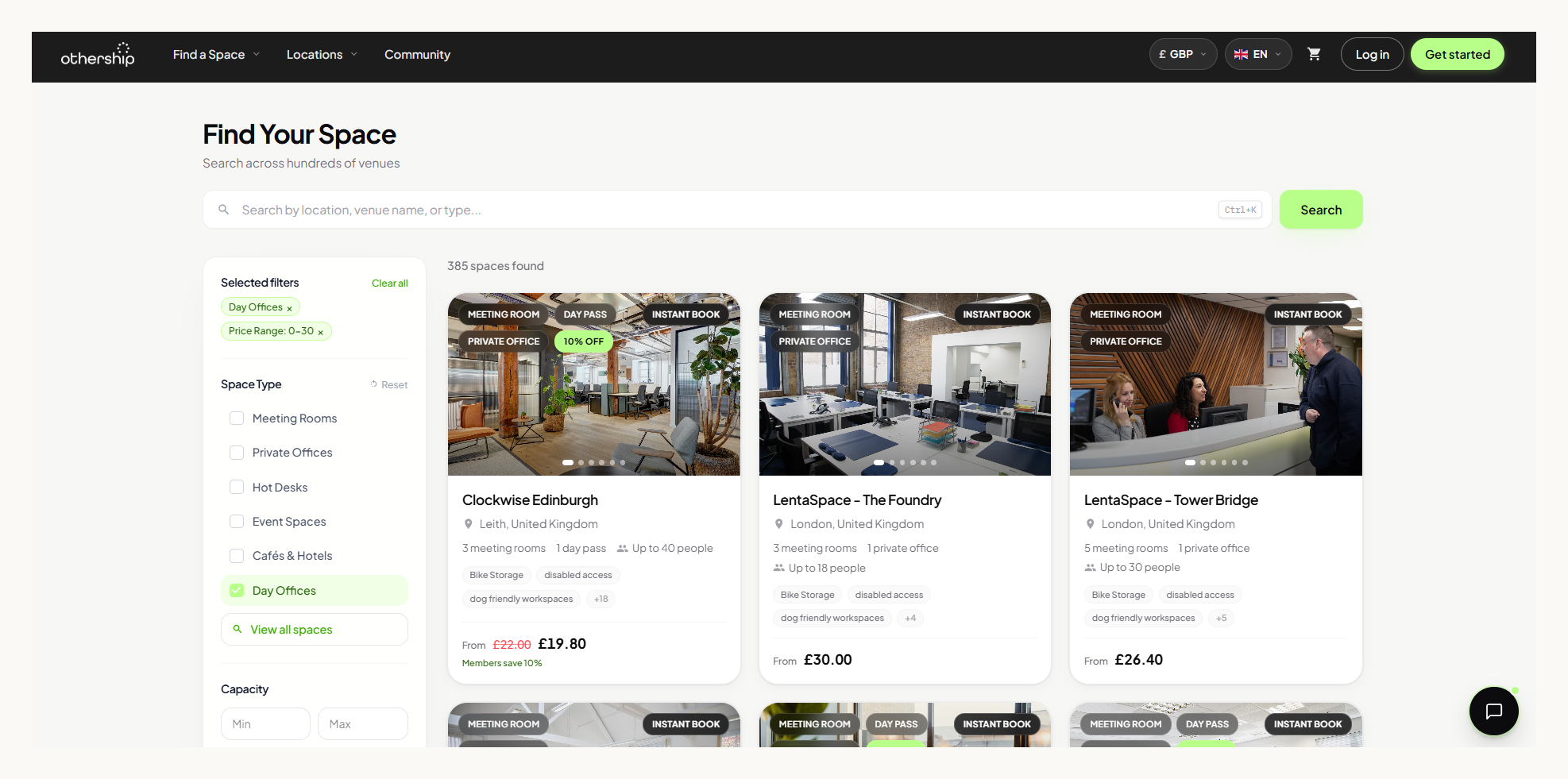
Want to see how this works in practice? Here you can claim a free workspace day for yourself, or a Premium Membership for your team.
The Visibility Gap: Seeing What's Actually Used
For the people managing office space - HR directors, operations leads, anyone accountable for a company's real estate - the gap is between what's showing as booked and what's actually occupied. The calendar might say a floor is mostly reserved. Whether that's true is a separate question entirely.
Independent research backs this up. Worklytics tracked meeting room bookings against actual usage from 2023 to 2025 and found the ratio between the two sliding from 0.85 down to 0.71 - meaning close to three in ten booked rooms now sit empty.
Separately, badge-swipe tracking across roughly 300,000 US office workers undertaken by Kastle puts national average attendance at just over half of pre-pandemic levels. People book a desk out of habit, or because company policy requires it, but then work from home anyway, creating what's sometimes called a "ghost booking", while the organisation continues paying for space that goes unused.
That's the kind of visibility Othership's Workplace Manager is built to surface, directly from a company's own booking system - no manual audit needed.
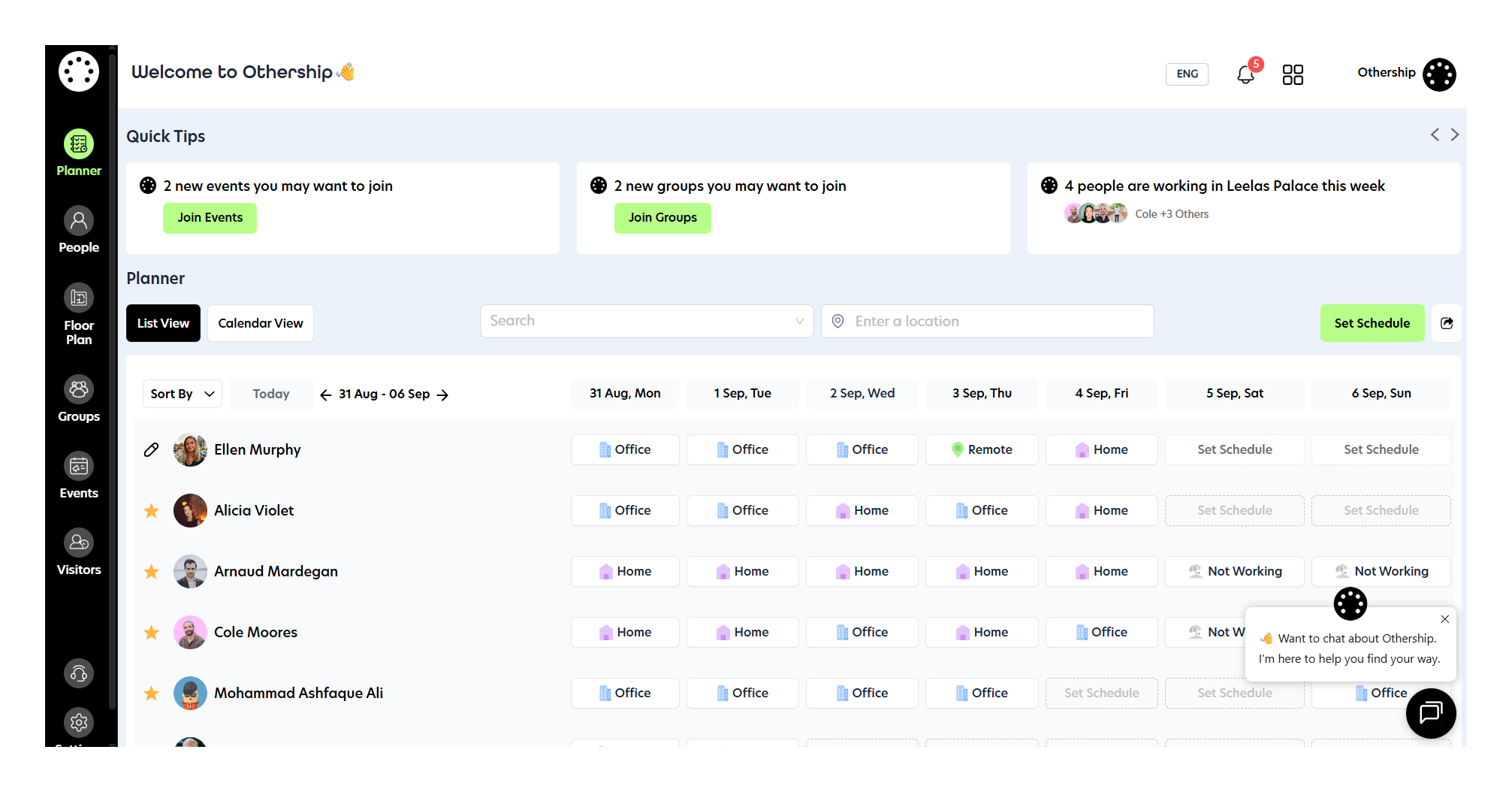
Neither the supply gap nor the visibility gap gets solved by working harder inside the current system - the supply gap or the visibility gap. You can't find the right space if you can't see what's actually available on the terms you need. You can't fix an office's footprint if you can't see what's actually being used.
Once there’s visibility, a decision to close a floor or renegotiate a lease can be backed by what happened in the building - not by what the calendar says. Desks and rooms that are consistently booked but empty can be offered out rather than paid for and ignored.
Whether you’re a HR leader, office manager or someone making decisions about the space you pay for, find out more about Othership’s Workplace Manager.

This Week's Remote Roles
🎯Fully Remote Jobs (No "Fake Remote" Here):
Visibility Before Action
Work happens across offices, homes, and third spaces. The teams and individuals who do best with this distributed way of working aren’t necessarily the ones with the fanciest office. They're the ones who can find a space that’s right for them, at a time that’s right for them - and aren't paying for space that isn't doing anything at all.
Stay Rebellious,
Michelle & The RR Team
P.S. If you’ve been hunting for a remote role, then come along to our Remote Job Academy live Q&A, ask your questions, and find out how the Remote Job Academy can help you land a fully remote role that actually aligns with your values. If you can’t make it live, then register anyway and we'll send you the recording. The Q&A will be on 29 September 2026, at 10am EDT/4pm CET. You can register for the Q&A here.
This newsletter is sponsored by Othership: The Platform for Finding and Managing Workspace.
A private room for a client call, working Wi-Fi, a space that fits your team - none of that should take an afternoon to sort out. Othership's Workspace Finder gives freelancers, remote employees, and distributed teams pay-as-you-go access to 500+ bookable workspaces and meeting rooms across the UK: filter, book, show up. For companies already paying for office space, Workplace Manager shows what's actually happening in it, the gap between booked and occupied, the ghost bookings, the empty floors, so you can fix your seating policy, downsize, or list the extra space on Othership's Marketplace and turn it into revenue.